
Cooling cafe and restaurant terraces
The hours a terrace sits empty are the hours a venue earns most. Here, misting is not about comfort; it is about getting capacity back.
- Goal
- Guest comfort
- System
- High pressure, does not wet
- Installation
- Retrofit to existing pergola
The problem it actually solves
The value of a terrace is measured in the hours it can be used. Through summer, most terraces are effectively out of service between midday and late afternoon: guests either move indoors or do not come at all. That is the longest service window of the day, lost.
A misting system gets those hours back. And it does so precisely when humidity is at its lowest, which is when the system works best. Evaporative cooling fits hospitality so well largely because of that timing coincidence.
Which system goes in
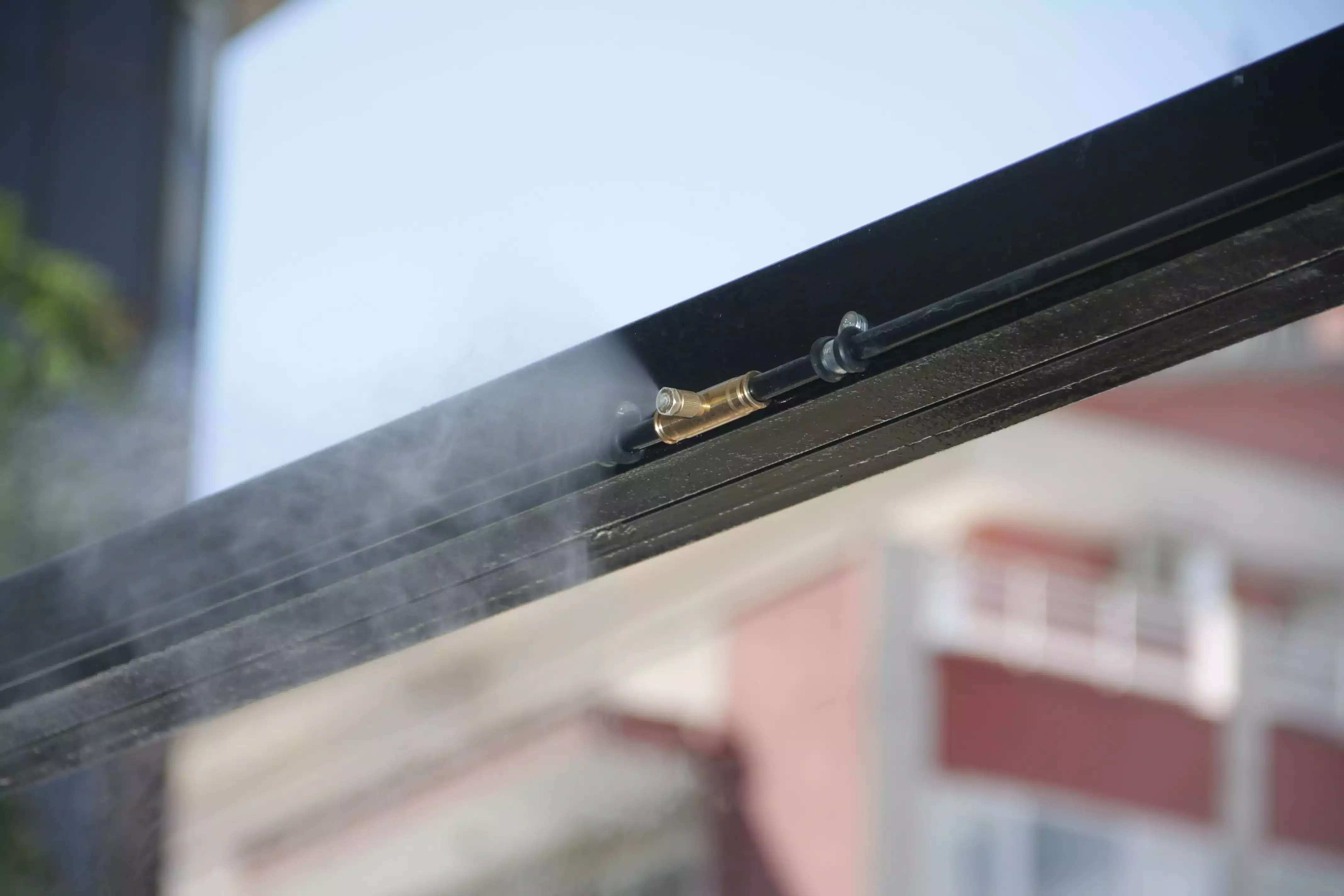
In a space where people sit and eat, the only acceptable option is a high pressure system. The droplet has to be small enough to evaporate before it reaches the table surface. A lower pressure installation looks like a saving at the quotation stage, but the result is wet tables, a slippery floor and warped menus.
This is also the answer if you have been looking at misting fans: with a fixed line the whole terrace is treated evenly and no appliance stands in the venue.
Layout by terrace type
- Pergola terrace: the line runs parallel to the inner edge of the pergola profile. The easiest installation and the cleanest looking.
- Awning terrace: a carrier profile is added to the front edge of the awning. Keeping load off the awning fabric itself matters.
- Open terrace with nothing overhead: posts go in around the edges, or a tension wire is run between the building facade and the opposite wall. Wind has the greatest effect here, so analysing its direction is critical.
- Large areas: feeding only from the perimeter leaves the middle untouched; a second line through the centre is needed.
The governing rule for layout is to run the line as high as the structure allows. On low pergolas, routing it around the outer frame rather than through the inside is usually the answer.
Insects and dust
A working mist curtain in an open area noticeably reduces flying insects entering the space. The mechanism is physical rather than chemical: small winged insects avoid a humid, moving layer of air. On terraces serving food this turns out to be the system's most appreciated side effect, and the one nobody expects.
Airborne dust settles with the fog in the same way. On terraces facing a road, there is a visible reduction in the dust that collects on table tops.
What to watch on the operating side
- Do not leave the timer to staff discretion. A system left running continuously wastes water and builds up humidity. Set it correctly once and lock it.
- Put the pump in the service area. A pump near the seating generates noise complaints.
- Change the filter cartridge mid-season. Under heavy use one cartridge will not last the summer; check at the first sign of pressure dropping.
- Drain the line at the end of the season. Details on the maintenance and winterising page.
Frequently asked questions
How many extra tables does misting gain a terrace?
Does the installation look bad in winter?
Do guests find it uncomfortable to sit underneath?
Related reading
Let's find the right system for your site
Just send us the width, length and height of the area in metres (e.g. 10 m × 20 m, 3 m high). Site survey and system design are free of charge.